


IHRC: Executive Summary
About HQ

"Because what we do today, we do for Generations"
Prof.h.c. Rafał Marcin Wasik
Secretary General
Chairperson IHRC Group
Transnational Intergovernmental Organization “International Commission on Human Rights” – IHRC is an influential private neutral organization recognized for its significant role in global security, peacebuilding, human rights, economic development, and diplomatic and humanitarian activities. IHRC pioneered the creation of the world’s first private diplomatic intergovernmental and transnational organization, known as Transnational Intergovernmental Organization (TIO). The organization operates on the basis of international conventions, including the Vienna Conventions of 1961, 1975 and 1986, and has obtained the status of a transnational intergovernmental organization through diplomatic agreements signed with governments represented by their Ministries of Foreign Affairs. These agreements are further complemented by cooperation with government agencies, the authorities of the autonomous republics, as well as regional and local authorities.
The copyright holders of the IHRC logo and graphics are the founders of the IHRC.
The IHRC has officially registered and accredited diplomatic missions as Special Diplomatic Missions in the Democratic Republic of the Congo, the Republic of Chad, the Federal Republic of Nigeria, the Republic of Niger, Georgia, Ukraine, and as a diplomatic branch in Pakistan. These missions serve as key operational hubs for the IHRC’s diplomatic and humanitarian work.
The IHRC has been officially recognized as a diplomatic organization in several countries, enjoying the associated privileges and immunities under international law. Although the IHRC is not affiliated with the United Nations and does not operate as an agency of the UN, it cooperates with the UN on various initiatives.
The Transnational Intergovernmental Organization International Commission on Human Rights, in accordance with the provisions of its Statute, issues diplomatic Laissez-Passer cards, diplomatic Travel Order cards and CD vehicle marking authorizations to its members participating in IHRC Diplomatic Missions.
Structure of the IHRC Group
- International Human Rights Commission ( Switzerland/ (Zurich) CHE-388.075.145
- International Human Rights Commission ( USA State of New Mexico ), 2024 ID: 758950 EIN 99-1910431
- International Human Rights Commission ( Slovak Republic/ Foundation (ICO 53789041)
- International Human Rights Commission ( Czech Republic / Edowment Fund IC 05967023
- International Human Rights Commission ( India Certificate No. IN-UP56982369729565W)
IHRC Branches office:
- International Human Rights Commission in Switzerland (Geneva) (CHE-367.969.172)
- International Human Rights Commission - Diplomatic Mission Democratic Republic of Congo ( Accreditation)
- International Human Rights Commission - Diplomatic Mission in Republic of Chad (Diplomatic Code 145),
- International Human Rights Commission - Special Diplomatic Mission in Ukraine ( MOU)
- International Human Rights Commission - Special Diplomatic Mission in Georgia ID 405496217
- International Human Rights Commission - Special Diplomatic Mission in Republic of Guinea-Bissau (MoU)
- International Human Rights Commission - Special Diplomatic Mission in Lebanon (Decree No. 6573)
- International Human Rights Commission - Special Diplomatic Mission in Republic of Niger ( MoU)
- International Human Rights Commission - Special Diplomatic Mission in Federal Republic of Nigeria ( MoU )
- International Human Rights Commission in Islamic Republic of Pakistan ( Registration in MINC)
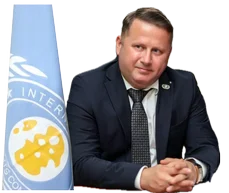 Prof. h.c. Rafal Marcin Wasik currently holds the esteemed position of General Secretary at the Transnational Intergovernmental Organization International Human Rights Commission - IHRC, where he is deeply committed to safeguarding and advancing human rights on a global scale. With a steadfast dedication to fostering a culture of peace among nations and ensuring the protection of human rights, Prof. Wasik's visionary leadership has propelled IHRC towards the pursuit of sustainable development, the propagation of gender equality, and the promotion of essential values.
Under Prof. Wasik's astute guidance, IHRC has embarked on initiatives aimed at enhancing the capacities of nations to engage in sustainable development through avenues such as educational access, relief programs, and ecological and bioethical endeavors. These undertakings are executed with a keen understanding of each nation's traditional, social, and cultural contexts, exemplifying a commitment to holistic and inclusive development.
Furthermore, Prof. Wasik's leadership has facilitated the propagation of fundamental human rights principles. This includes initiatives focused on peace promotion, gender equality, health advancement, and economic progress. Particularly noteworthy is IHRC's diligent work in raising awareness regarding the rights of women, children, and youth in developing nations, ensuring their protection and empowerment.
Prof. Wasik's extensive involvement extends to his role as an architect of conflict resolution in Ukraine. The formal establishment of IHRC's Central Office in Ukraine in 2014 underscores his dedication to the global network of human rights protection. Prof. Wasik's proactive engagement in monitoring pivotal events, such as the early presidential elections in Ukraine, has earned him recognition as an international observer. The proposals generated by IHRC's Central Office have found practical application in significant peace initiatives, including the President of Ukraine's Peace Plan and the Minsk Arrangements of September 2014.
Notably, Prof. Wasik's endeavors encompass diverse arenas. As an international expert from the International Agency of Public Security Geneva (AIAPS), he has facilitated diplomatic meetings, conferences, and humanitarian efforts across the globe. His multifaceted expertise in human rights and organization management positions him as a prominent figure in the realm of international humanitarian engagement.
Prof. Wasik's resolute belief that the actions taken today reverberate through generations underscores his unwavering commitment to resolving international conflicts and addressing humanitarian crises. Amidst the complex dynamics of fragile conflict zones, where over 2 billion people are ensnared, Prof. Wasik's leadership seeks to alleviate suffering, mitigate tensions, and uphold human dignity.
In essence, Prof. h.c. Rafal Marcin Wasik's tenure as the General Secretary of IHRC is emblematic of a life dedicated to serving humanity. His steadfast passion for human rights, peace, and global progress is evident in his tireless efforts to effect positive change, whether through conflict resolution, advocacy, or diplomatic engagement. The principles of universality, equality, and dignity that underpin his work resonate with the foundational tenets of human rights, encapsulating the essence of his contributions to the betterment of our world.
IHRC Mission
The core mission of the International Human Rights Commission (IHRC) is to advance and safeguard human rights, foster diplomatic collaboration, and facilitate humanitarian initiatives on a global scale. Anchored in the principles enshrined within the Charter of the United Nations, the Universal Declaration of Human Rights, and the European Convention on Human Rights, IHRC is dedicated to upholding the dignity of individuals, promoting intergovernmental dialogue, and championing equality and justice.
Our objectives encompass a range of vital activities, including:
 Elevating information dissemination within public institutions.
Orchestrating and supporting impartial observation missions worldwide.
Resolutely defending the sanctity of life and the integrity of human rights.
Cultivating a platform for constructive intergovernmental communication.
Encouraging proactive involvement in governmental initiatives and diplomatic undertakings.
Underpinned by these ideals, IHRC undertakes a spectrum of purposeful endeavors:
Strategizing and executing specialized, peacekeeping, and diplomatic missions.
Establishing an IHRC diplomatic corps, fostering effective representation and support.
Validating travel credentials for IHRC diplomatic mission members, compliant with international norms.
Bestowing IHRC diplomatic corps insignia for accredited diplomatic mission vehicles, as well as the respective diplomatic passports.
Coordinating essential humanitarian and developmental aid, both internationally and domestically.
Extending aid and advocacy to marginalized, politically persecuted, and oppressed individuals and communities.
Assisting local governing bodies and grassroots organizations, both overseas and within Switzerland.
Championing the rights and well-being of minority groups.
Offering comprehensive social counseling services, accessible globally.
Spearheading educational campaigns to augment awareness and knowledge.
Engaging in voluntary pursuits for positive impact, both at home and abroad.
Curating cultural and athletic events that foster mutual understanding and collaboration.
Undertaking meticulous observation and evaluation of democratic processes, particularly electoral proceedings, worldwide.
Ensuring the integrity of referendums through oversight and assessment.
Combatting human trafficking with targeted measures.
Thwarting illicit child adoption through stringent protocols.
Pioneering search and recovery operations for individuals, especially children, affected by conflicts.
Financially, IHRC is empowered to provide funding, in the form of cash credits and loans, to individuals and entities that align with its noble objectives.
IHRC's global engagement is a testament to its dedication to the overarching mission, with all proceeds and capital meticulously directed towards the realization of the stipulated goals. In essence, IHRC operates as a non-profit entity, steadfastly committed to the cause it champions.
GOVERMENTS AGREEMENTS
Government of the State of the African Diaspora ( Treaty signed on September 17, 2023)


Democratic Republic of the Congo (Headquarters Agreement Between the Government DRC and IHRC :August 09,2023)


Central African Republic Republic of Chad ( Memorandum of Undestanding signed on November 30, 2020)

Republic of Côte d'Ivoire (Instrument of Accession:November 03,2020 and December 12,2020)


Republic of Guinea-Bissau ( Memorandum of Muntal Undestanding and Cooperation/ signed on March 12, 2018)


Republic of Niger (Memorandum of Muntal Undestanding and Cooperation/ signed on April 30, 2020)

Ukraine (Memorandum of Undestanding signed on April 20, 2022)
AGREEMENTS WITH AUTONOMOUS TERRITORY


Autonomous Republic of Abkhazia, Georgia ( Memorandum of Undestanding signed on July 17, 2021 and June 23, 2022)
Autonomous Administration of North and East Syria, Ayn Issa (Treaty signed on November 30, 2022)
INTERNATIONAL PARTNERSHIP (AGREEMENTS)

National Agency for Prohibition of Trafficking in Persons (NAPTIP) from Federal Republic of Nigeria
( Memorandum of Undestanding signed on September 2, 2020)
Peace and Security Cluster of Economic and Cultural Council of the African Union ECOSSOC
( Memorandum of Undestanding and Cooperation signed on February 20, 2022)
INTERPOL CENTER UN
Special status with UN ECOSOC
( Memorandum of Undestanding Cooperative Agreement signed on June 23, 2023)

SECURITY ACADEMY INTERPOL UN
Memorandum of Understanding Cooperative Agreement of November 10, 2023
BRICS International Alliance
(IABSP)
(Memorandum of Understanding of March 10,2023)
ZO NSZZ FSG at NwOSG in Republic of Poland
( Memorandum of Undestanding Cooperative Agreement signed on June 5, 2023)

Legal Aid Board Sierra Leone
( Memorandum of Undestanding Cooperative Agreement signed on July 26, 2023)
INTERNATIONAL LOCAL PARTNERSHIP (ILOPA)
As part of the "IHRC International Local Partnership" program, was signed a Memorandum of Understanding with the local authorities of territories and cities in Europe, Africa and Asia. This program is to create a platform for local authorities from around the world to improve the quality and effectiveness of their service to their local communities thanks to ongoing, close and direct cooperation.
Local Government in Republic of Cabo Verde :
 Camara Municipal da Boavista ( Memorandum of Undestanding signed on June 30, 2021)
  Camara Municipal da Riberia Grande da Santiago, ( Memorandum of Undestanding signed on March 23, 2021)
 Camara Municipal de Sao Domingos,( Memorandum of Undestanding signed on April 06, 2021)
 Camara Municipal de Sao Miguel,( Memorandum of Undestanding signed on Jauary 14, 2021)
 Camara Municipal de Santa Crouze,( Memorandum of Undestanding signed on March 03, 2021)
Local Government in Israel:
 Rishon LeZion, Buturyn (Memorandum of Undestanding signed on 19 July 2022)
Local Government in Republic of Moldova:
 Kishinev (Chisinau) (Memorandum of Muntal Undestanding and Cooperation Agreement signed on 6 March, 2022)
Local Government in Ukraine:,
 Baturyn City Terytorial Community, (Memorandum signed on 7 April, 2022)
 Chernihiv Regional Military Administration , (Memorandum of Muntal Undestanding and Cooperation Agreement signed on 6 March, 2022)
 Drohobych Territorial Council, (Memorandum signed on_24 March 2022)
 Kharkiv City Council, (Memorandum of Muntal Undestanding signed on_17 March 2022)
 Khmelnycky Regional Military Administration, (Memorandum of Muntal Undestanding and Cooperation Agreement signed on 16 March, 2022)
 Lviv Regional Military Administration,(Memorandum of Muntal Undestanding and Cooperation Agreement signed on 16 March, 2022)
 Polonne Territorial Hromada, (Memorandum of Muntal Undestanding signed on_21 August 2021)
 Poltava Regional Military Administration, (Memorandum of Muntal Undestanding and Cooperation Agreement signed on 16 March, 2022)
 Pryluky District Military Administration, (Memorandum of Muntal Undestanding and Cooperation Agreement signed on 24 March, 2022)
 Rivne, (Memorandum signed on_24 March 2022)
 Zaporizhia City of Council, (Memorandum of Muntal Undestanding and Cooperation Agreement signed on 18 March, 2022)
-
 Volyn Oblast, (Memorandum of Muntal Undestanding and Cooperation Agreement signed on 27 February, 2022)
  Khotin territorial community of Sumy district of Sumy region (Memorandum of Cooperation Agreement signed on 28 July, 2023)
 Lebedyn City Territorial Community of Lebedyn City Council of Sumy region (Memorandum of Cooperation Agreement signed on 28 July, 2023)
 Municipality of Pristina ( Memorandum of Muntal Undestanding and Cooperation Agreement signed on 16 May, 2023)
Global cooperation platforms "United Organizations"
On "United Organizations" IHRC group organizations from all over the world creating a transnational platform for cooperation and development. Among other the accession to the UO signed the Ministry, and hundreds of governmental and non-governmental organizations from around the world.
Special Monitoring Mission - SMM IHRC
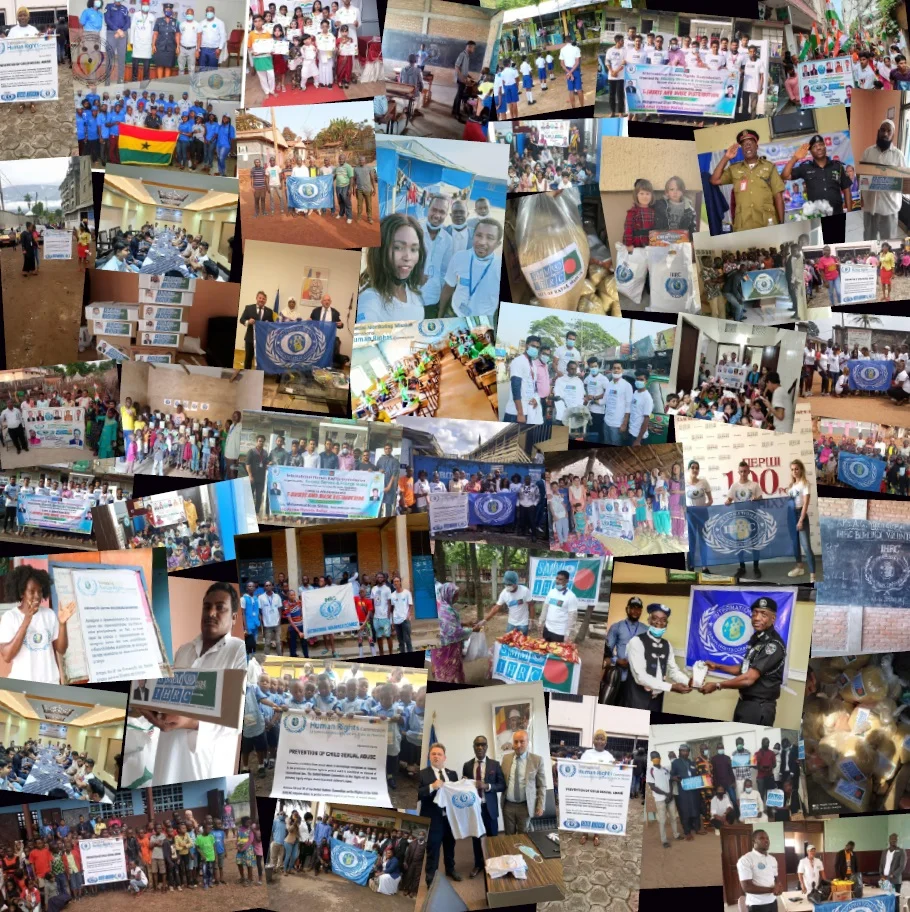
Hundreds of thousands of people in need received direct physical and substantive assistance provided to their local communities by over 7500 SMM IHRC volunteers in 114 countries on 6 continents SMM IHRC volunteers played an honored and responsible role
seasoned and independent observers of elections at all levels in Europe, Africa and Asia https://www.smmihrc.org
Volunteering

SMM IHRC Volunteering
National Society
Platforms
 UO - United Organizations
Reports
Observatory for the Supervision and Protection of Children, Youth and Women (OCYW)

The Observatory for the Supervision and Protection of Children, Young People and Women (OCYW), which is based in the Children, Youth and Women section of the IHRC, aims to protect and combat hardship, poverty, exploitation, abuse and all forms of 5 violence and intimidation (including preventively). The observatory is headed by Dr. Salvatore Pignataro, a world-renowned forensic criminologist and security expert. More information on the Observatory's activities can be found at the following link: l.